
When it comes to sleep quality, few people realize that optimal bedroom lighting for sleep plays a crucial role. The way you illuminate your space after dusk can directly influence your body’s natural circadian rhythms. Harsh overhead lights or screens blaring blue light can trick your brain into thinking it’s still daytime, making it harder to drift into restful slumber.
By thoughtfully curating the glow in your bedroom—from the type of bulb to the timing of dimming—you can set the stage for deeper, more restorative sleep. Simple adjustments, like swapping a bright overhead fixture for a warm‐white bedside lamp or installing dimmable sconces, can make a world of difference. In this article, we’ll explore how to achieve that perfect, soothing ambiance so you wake up feeling refreshed.

Benefits of Thoughtful Bedroom Lighting
Creating a calming nighttime environment begins with choosing bulbs that emit warm, amber hues rather than glaring whites or cool blues. Warm‐white LED or low‐wattage incandescent bulbs mimic the natural spectrum of sunset, signaling to your brain that it’s time to wind down. Strategically placed lamp shades or dimmable fixtures allow you to gradually dial down the brightness as evening progresses. Rather than relying on a single overhead fixture, consider a combination of ambient and task lighting—perhaps a small table lamp by the nightstand and a soft wall sconce near a reading nook. This layered approach allows you to tailor light levels for reading, relaxation, or preparing for bed without abrupt transitions that disrupt your body’s melatonin production.
Equally important is the concept of light timing. Our bodies respond to darkness by producing melatonin, the hormone that facilitates sleep. If you plan your lighting to dim gradually over the course of an hour or two—ideally using fixtures with a built‐in timer or smart‐home integration—you can gently cue your brain that bedtime is approaching. Avoid using electronic devices at full brightness; if you must read on a tablet or switch through apps, lower the screen’s blue‐light filter and reduce ambient lighting. By dimming lights earlier in the evening and using blackout curtains to block streetlamps or passing car headlights, you create a cocoon of darkness that encourages an uninterrupted night’s rest.
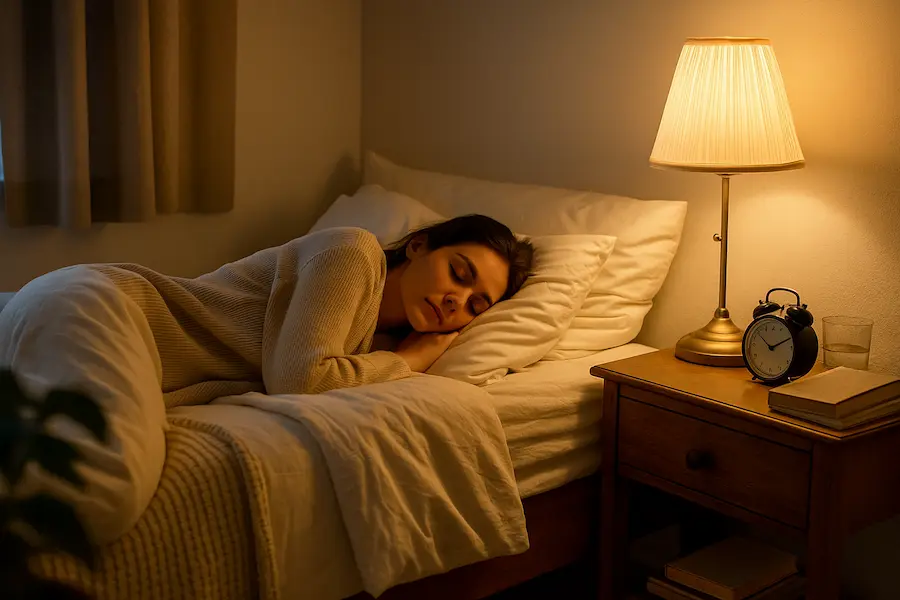
How to Achieve Optimal Bedroom Lighting for Sleep
Design choices also make a difference: matte or fabric shades diffuse light more softly than glossy, reflective surfaces, preventing harsh glare. Positioning a soft‐glow fixture near the floor can wash the walls in a gentle radiance, perfect for midnight bathroom trips without fully jolting you awake. If you share your bed with a partner whose preferred light level differs, opt for directional bedside lamps or individual wall‐mounted sconces. That way, one person can read under a focused beam while the other basks in dimmer ambient light. The goal is to strike a balance that maintains intimacy and comfort without forcing both sleepers into a one‐size‐fits‐all brightness level.
Finally, consider swapping standard bulbs for tunable LEDs that change color temperature throughout the evening. Some modern fixtures gradually shift from cool daylight in the morning to warm amber by evening, reinforcing your body’s internal clock. Even a simple smart bulb set on a twilight schedule can adapt your room’s ambiance in harmony with natural sunset times. Over time, these subtle transitions train your mind and body to anticipate rest, making it easier to fall asleep as soon as your head hits the pillow.
By prioritizing optimal bedroom lighting for sleep—from bulb choice to fixture placement and timing—you can transform your nightly routine. Thoughtful lighting not only enhances relaxation but also sets a natural rhythm that supports deep, uninterrupted rest. When morning arrives, you’ll wake feeling more refreshed, alert, and ready to seize the day.
→ See What’s New at Le Pyjama
New season, new comfort — explore our latest arrivals.